
Willows are a marvelous subject for ecological study. The distribution of willow species in our region relates to phenology, form, root morphology, palatability and who knows what else that we can’t see yet. As I have noted before, hybridization is rampant in willows, and yet these species maintain their integrity as a result of intense selection in core habitats. I can’t think of a better subject for investigation. Whatever we learn is all the more relevant because of the fundamental role willows play in supporting beaver.
Hundreds of thousands of acres of wetlands formerly blanketed the lowlands of western Washington and Oregon, almost all of them created or enhanced through the activities of beaver. The wholesale elimination of both beaver and willows, tens of thousands of miles of drainage canals and ditches, and something around 300 million lineal feet of drainage tile have ensured that the vast majority of wetlands in the Willamette Valley have been wiped out. They have been dried up for over a century, and are now used mostly to grow grass seed for lawns in North Carolina and Tennessee.
So our richest, most bountiful habitats have been reduced to a very sad state, but there is great hope! All we need to do is plant willows in the right spots, and it will mostly come back. And it doesn’t take long. Ten years prior to the photo below, this was a grass seed field. Now, there are sora, Virginia rails, yellow-breasted chats and a host of other songbirds, wading birds, waterfowl, eagles, various accipters, and owls. There are western pond turtles, leopard frogs, red legged frogs chorus frogs galore, and an insane diversity of flying insects. All of these creatures had no quarter before. Now his place buzzes with life, and it’s all right here on our farm.
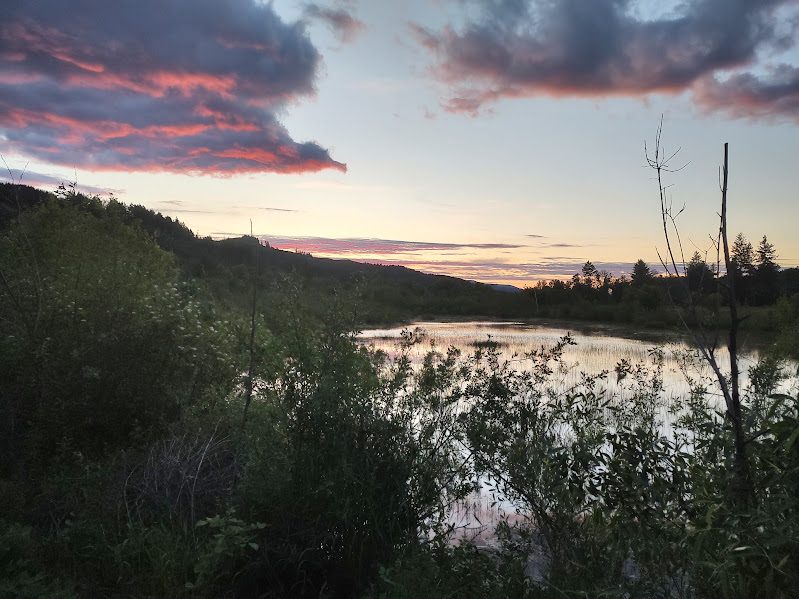
If we did nothing but plant willows in key locations throughout the Willamette Valley, we would achieve something like this over hundreds of thousands of acres, acres that are currently economically underperforming. Why are we not doing this?
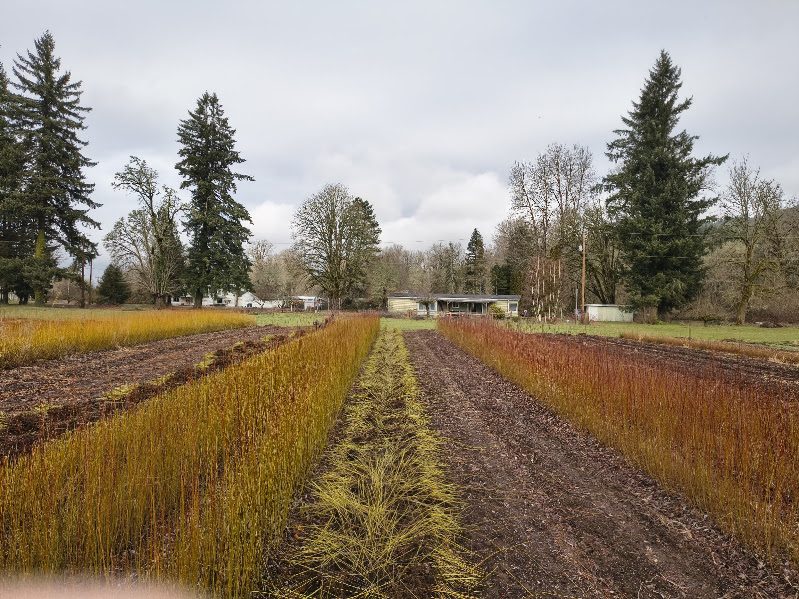
Here are some of the remaining willows in our production fields. While the hundreds of thousands of individual seedlings in this photo are incredibly varied, and often challenging to confidently identify, they show their true colors at the population level. When one zooms out, there are clear differences in color and form that emerge and distinguish the species – in this case, Salix lasiandra on the left, S. hookeriana middle and S. sitchensis on the right.
I am going to offer a series of classes on these and other groups of plants, as well as wetland ecology with a focus on beaver and willows starting this summer. Keep an eye out for announcements here in the blog.
Buy some willows, and plant them by an ugly ditch near you. The beaver will likely use them to plug up the ditch and create something beautiful.
-George