
Alright, before we talk about birds and bees, I just gotta say..it’s HOT. And sticky. I took a year off college and worked construction in New Orleans in 1983. Swinging a hammer in New Orleans in summer is brutally, mind-numbingly sweltering. We’re not that hot and sticky, but things are veering uncomfortably in that direction. Why is it weirdly hot and sticky? Because the entire North Pacific is running about 3.5C above normal, and the Arctic is off the charts. That’s a lot of hot water parked off our coast. So yeah, it’s hot and sticky and summers are going to be more and more that way until the global industrial machine decides we’ve had enough and they get the government to cool things off (and take all the liability if things go wrong) at taxpayer expense. This is the unfortunate truth of the matter, and government (red, blue and purple) and the industries that own them all have been complicit in making it happen and obscuring the facts. Are we good with this?
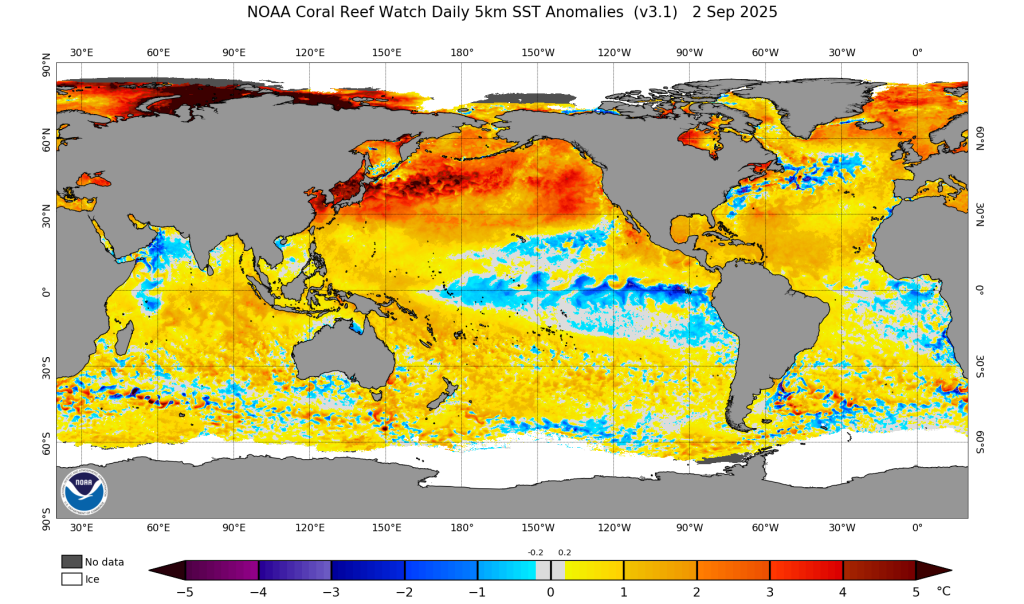
All of the talk of “climate-adapted plants” makes it sound like we have solutions to this insane problem. We don’t, and we can only hope that the engineers get the math right when Exxon and pals decide to push the button on climate engineering. Meanwhile, you are all encouraged to fly to the next global summit on climate change, in Paris. It’s next week! The government and academic experts there will be discussing how AI and nanotechnology will be attacking the above map. Bonne chance! Viva la France!
Back to the birds and bees. Ahhh..nature soothes my soul.
The bees are still awake and need food. Late summer and early fall are also peak season for some butterflies. Hummers are still around too. So what are you going to do? Let the weeds grow! It’s easy and free, and the critters love it. We’ve let the weeds off the chain all around the farm and it’s a lot of fun to see how pollinators use so many of these plants this time of year – both native and non-native.
By the way, I’m recommending a new phrase to describe some of the plants that we have introduced to the Northwest from all over the world that get a bad rap. As I’ve mentioned, we have imported at least 30,000 species of plants, and who knows how many fungi, insects, bacteria and tropical diseases, into the Willamette Valley. Most of the introduced plants get ignored by most people, but some of the most successful of them get tagged as “invasive” and “noxious.” I get it. I have to fight off some of them here at the farm. I love native plants too and it has been sad to see them pushed aside by these bully newcomers.
But..the newcomers didn’t invade anything. We brought them here. I think we should call them “welcomed travelers” or “honored guests.” It’s rude to invite someone in and then call them noxious and slather them with herbicides. The multitude of state and federal agencies that are supposed to be guarding the borders and regulating trade have utterly failed in that task, and will continue to fail. If we don’t like how the bugs, slugs, snakes and plants are behaving after we invite them into our big bed, then why do we keep inviting them? And once they are firmly and irrevocably entrenched in the landscape, why do we persist in trying to eradicate them? It’s futile, destructive and a waste of good time and money. This will be the subject of some future posts for sure..
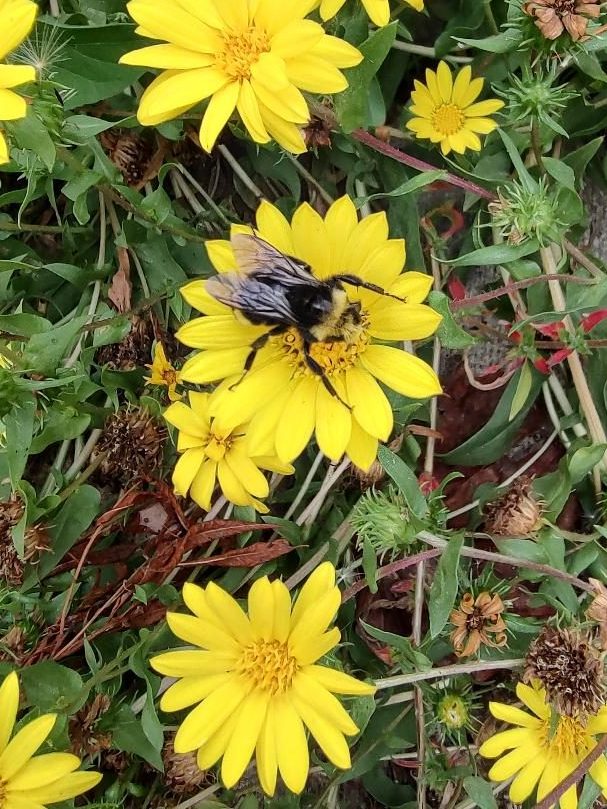
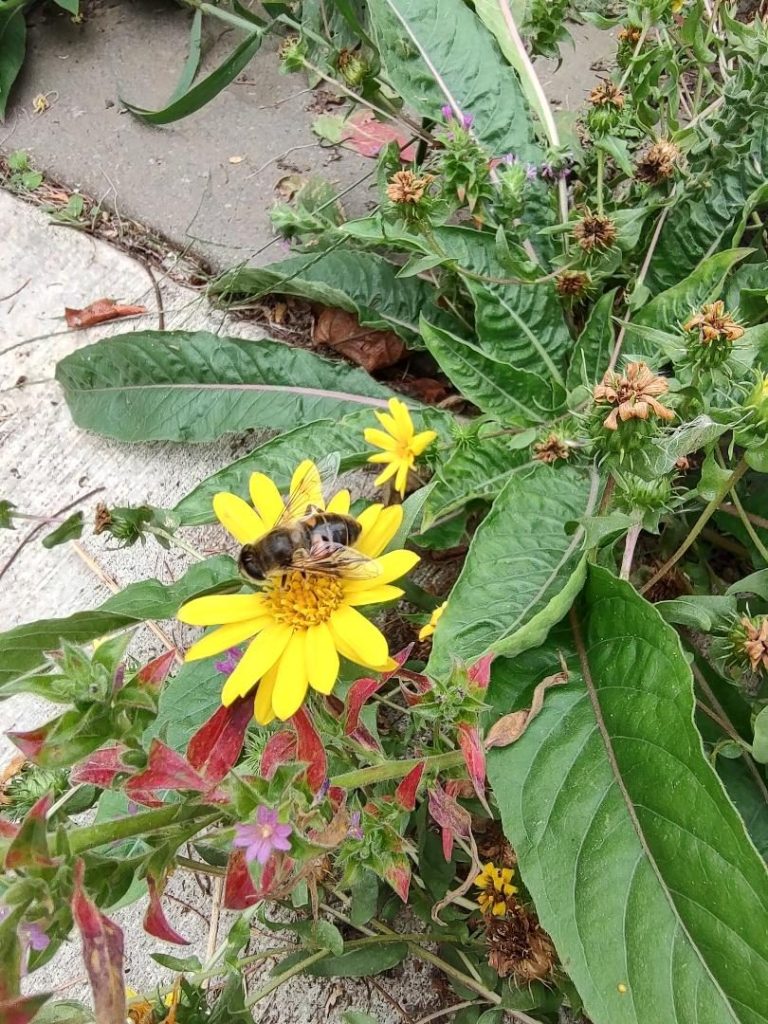
Back to the bees! One of my favorite plants this time of year is gumweed. It’s gorgeous and the bees love it. Flies too!
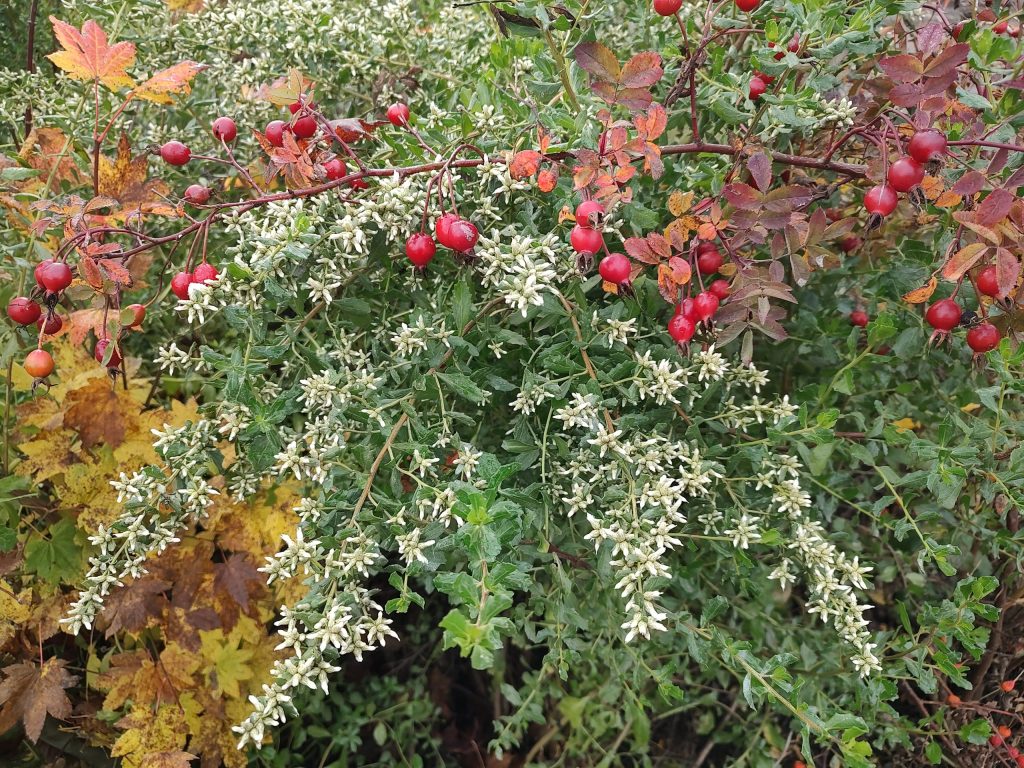
Another favorite, and one of the best plants to support an array of late-season pollinators is coyote brush – Baccharis pilularis. This fantastically drought and heat-tolerant shrub is native to the Willamette Valley and the Coast Range north at least to Tillamook and Washington Counties. They are dioecious, with a delightfully sweet to footy scent that varies by sex and time of day, attracting bees as well as flies and beetles. Here is a female, flowering and fruiting in November, when most all other flowers are long gone. It is posing with a hybrid rose (Rosa nutkana X rubiginosa).
We have about 3500 Baccharis left. Buy some for your late fall arthropod friends!
See y’all next time,
-George