
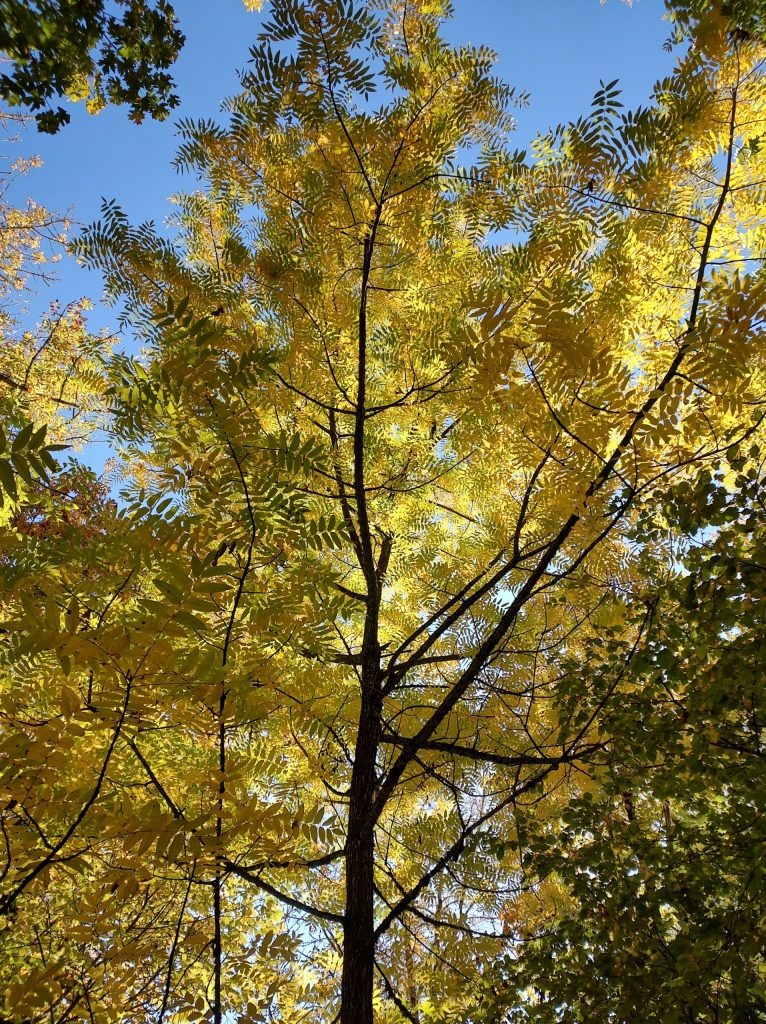
Walnut was one of the staples of the pioneer family, along with black locust and apples. Apples provided reliable food and beverage, while walnut and locust both served needs for durable fenceposts, tool handles and various wooden implements. You’ll find these old pioneer trees as evidence of abandoned homesteads all around the Willamette Valley, and if you look carefully you’ll see all three naturalizing nearby along streams and in woodlands.
But what is this walnut that is now naturalizing freely in our area? There is evidence suggesting a hybrid origin for this population, involving two very closely related species – the eastern Juglans nigra (black walnut) and the Californian J. hindsii (Claro walnut). The hybrid between these two species was first developed intentionally by Luther Burbank and was used extensively as a rootstock for the English walnut, both in Oregon and California. Hybrids can also occur naturally when these two walnut species are growing in proximity. For nearly 100 years now, jays and squirells have been spreading various walnuts from rogue orchard rootstocks and urban plantings, creating a legacy of high-value trees which can now be found throughout the Willamette Valley. Woodworkers who scour the Valley for walnut trees to cut or salvage know the difference between black walnut, claro, and the hybrid Oregon walnut, which as you might expect, has intermediate wood qualities. And what I hear is that most of what is out there is the hybrid – Oregon walnut.
The Oregon walnut is an extraordinary tree. It has beautiful form when grown in a stand. A fast growing hardwood, Oregon walnut frequently achieves heights over 100 feet, with long, clear logs that yield extremely high-value lumber. The lumber is used for gunstocks, cabinetry, paneling, high-quality furniture, musical instruments and other fine woodwork.
We have been collecting and growing “Oregon walnut” for four years, and there are indeed features of these plants that seem intermediate, particularly in their well-developed terminal leaflets and leaf pubescence. They are remarkably robust, especially on rich alluvial soils, and they are highly shade tolerant. These features make them an excellent choice to replace the functions of Oregon ash along streams and rivers. The young tree below, which has volunteered beneath much larger ash and maple along the Tualatin River in Washington County, is typical of what is happening right now in our Willamette Valley riparian woodlands.
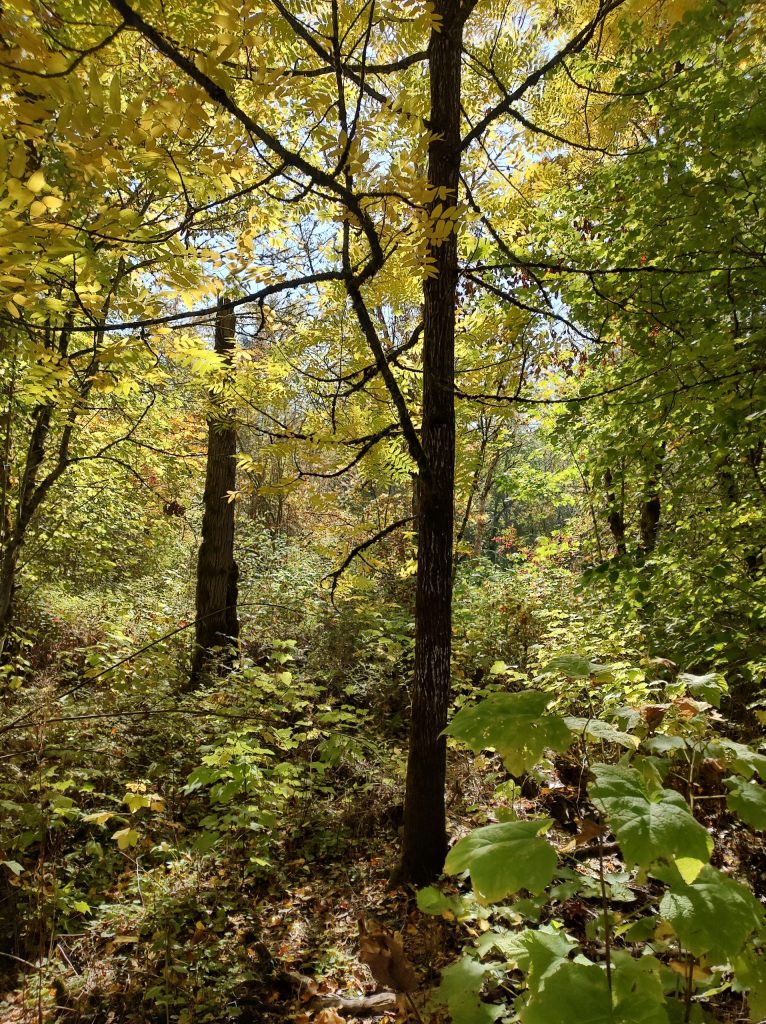
So if you have a lot of ash, now is a great time to clear them out and plant some walnuts. Or if you want to diversify your growing stock to include a fast-growing, high-value hardwood, this is your tree. If your grandkids are fortunate enough to be woodworkers, they will be glad you did. We have over 5,000 beautiful seedlings in stock, and they are on sale now at 30% off. We also have additional savings for OSWA members.
When you are ready to grow high-value hardwoods, call the sales line at 503.470.0420 or send us an email at sales@schollsvalley.com and ask about the special on the Oregon Walnut!