
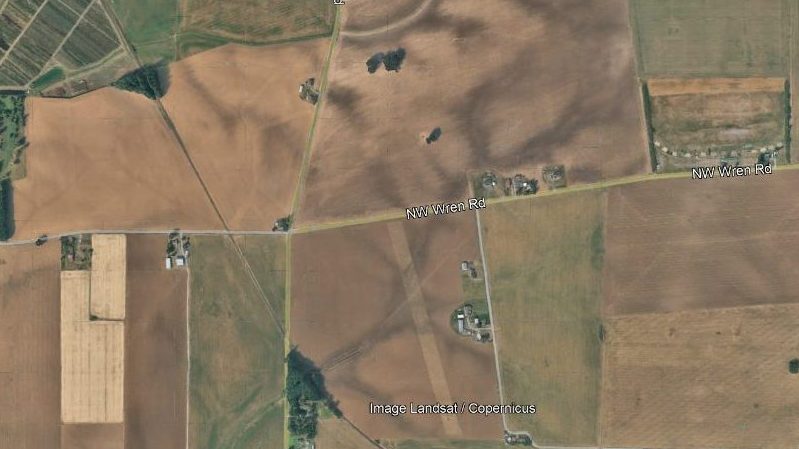
For those of you involved in the restoration and management of native plants, it’s time to get serious and do the math, assuming you actually want to make a difference, whatever that means for you. For some of you, perhaps it means a future world where nature functions to support a diversity of wild populations of plants and animals in pristine landscapes. If this is your only goal, I’d say you can kick back and enjoy the show because short of complete global incineration, this outcome is nearly guaranteed. Nature will prevail, and diversity will re-emerge even in landscapes such as the floor of the Willamette Valley where we have managed to totally obliterate native plant and animal diversity. Here’s what one of those sterilized landscapes looks like today:
If, on the other hand, you have some hope that humans will be around to enjoy and participate in the natural beauty of this remarkable planet, then you better wake up and get to work. That outcome is very much under threat, and its likelihood diminishes with every passing year. The math makes that absolutely crystal clear, if you choose to do the calculations.
In the above landscape, every acre of farm field, ditch bank and roadside has now been sprayed with herbicides dozens or even hundreds of times, with every pass of the spray boom eliminating diversity. Any rare native plant has long since been annihilated, and populations of insects, birds, and almost anything else of real interest have disappeared with them. The only things left are a few over-worked humans, their simple-minded monocultures, rats and an occasional band of crows or starlings. This is the human thumbprint on today’s technolological landscape, the product of an unholy union between corporate greed and university science. Plus a pinch of stupid.
But now we also have a multitude of government programs to study and conserve biodiversity, native plants and so on. These programs are provisioned with tens of millions of taxpayer and ratepayer dollars because folks have realized that our assault on biodiversity is having off-target effects on things we care about like water, honeybees and fish. Aren’t these programs, with their bureaucrats and field technicians and fistfuls of cash, going to begin to reverse all of these losses and restore the natural functions of wild plants for the benefit of waterways, fish, pollinators and ultimately humans? No. Absolutely not. And here’s why:
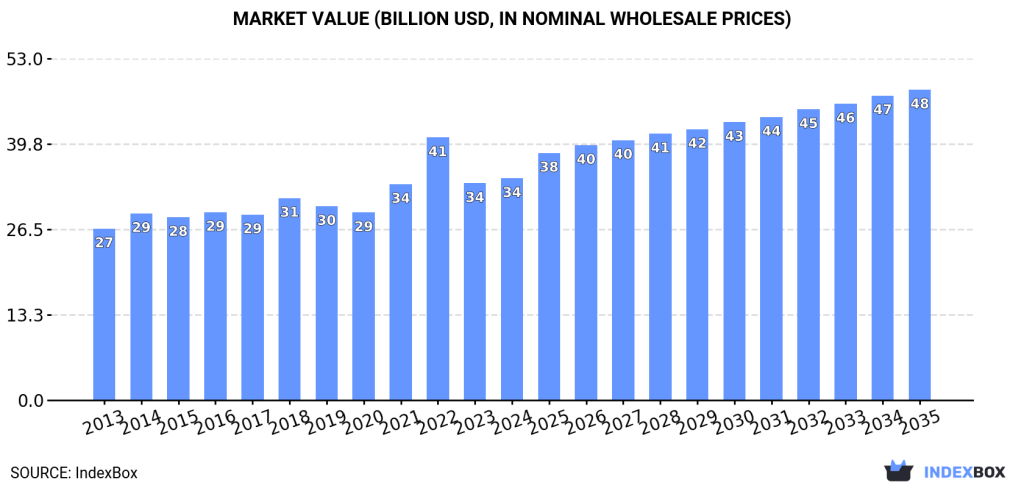
The global wholesale herbicide market!
Ain’t it just grand how the Epstein class makes so much cash? So much cash they just have to spend it on private islands and unsavory passtimes. The real power on this planet is global corporations. They pull all of the strings and they push all of the buttons necessary to ensure that next quarter is more lucrative than the last. Biodiversity is of less than zero concern to these people, and they fully expect that global annual consumption of herbicides, currently at 5.28 billion pounds of herbicide active ingredients, will increase at least another 25% over the next decade. The more bullish outlook projects that we will be pushing 9 billion pounds of herbicides applied to the worlds forests, grasslands and fields by 2035. These folks are doing the math, and their calculations do not include either bees or biodiversity, nor do they include you or your children. Human fertility trends suggest that the modern, chemical-ridden world is taking a toll on humanity’s future, and if there is indeed any causal correlation between the increase in herbicide use and the decrease in human fertility, then the global corporations have a big future correction coming, driven by cratering of the human population. But two quarters out is long-term thinking for these crafty folks. They don’t care if humanity suffers and dies, either now or 30 years from now, as long as they get their cash next quarter. Crazy, no?
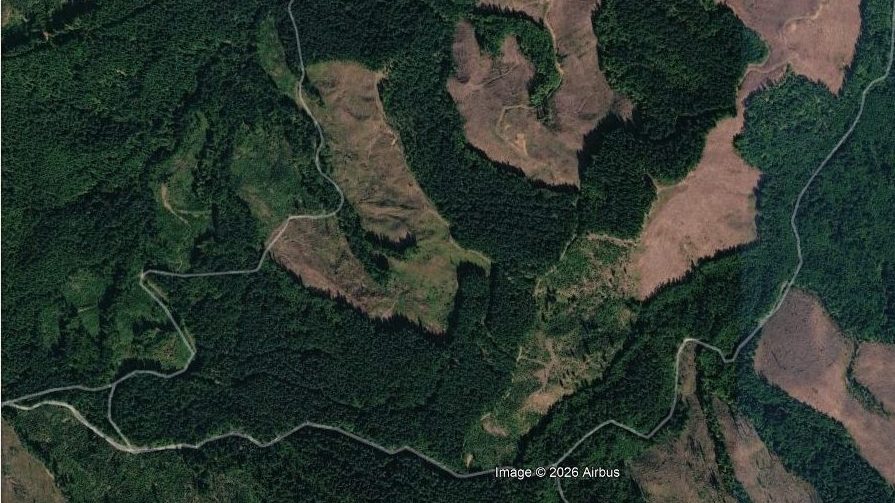
But as much as I despise this two-quarter mindset, I’m even more disappointed in government. Our government could do so much with the money and power it currently has to counteract deplorable corporate behavior, but it fails to deliver for the public, over and over. I have dozens of specific examples of this failure to perform, but here is an especially evocative one that is relevant to the current topic. As I mentioned last post, I am engaging the Oregon Department of Forestry with regard to their aerial herbicide assault on native plants in the Coast Range. While I am reaching out to the foresters at ODF, I thought I’d also reach out to the Oregon Watershed Enhancement Board. OWEB funds grants that, among other things, seek to restore healthy riparian function in the Coast Range by planting willows, vine maple, alder and the like along coastal rivers – the same plants that ODF destroys by the tens of millions every single year on the Tillamook State Forest. So I reached out to the OWEB director to ask whether they had had any communication with ODF about this obvious disconnect.
I got a call back from Stephanie Page, Deputy Director of OWEB. She politely listened to what I had to say. She then informed me, without going into any detail, that ODF and OWEB do communicate. Asked whether this communication ever touches on topics of possible conflict, such as using state funds to plant and foster native plants on the one hand and to kill them on the other, she replied by saying that in all their interactions with other state agencies, OWEB seeks to “stay in our lane.”
To me, the “lane” that should run right down the middle of every state agency is to do right by the taxpaying citizens (and in OWEB’s case, the video lottery addicts) of this state. Doing right by the taxpayer means to identify policy disconnects that are wasting our money, whether within a single agency or across multiple agencies. It’s all our money, not theirs. If the state is going to kill native plants by the billions, it does not make any sense at all to turn around and waste our money to plant them elsewhere. OWEB and ODF might argue that ODF manages forests in the uplands and OWEB supports riparian restoration along streams. But it doesn’t work that way, and anyone with the salary and authority of OWEB’s Deputy Director should know something so fundamental to the resources they manage. Natural systems and their constituent populations of native plants are not segregated in the landscape in such a nice tidy way. They occupy multi-dimensional continuums that criss-cross and interconnect the landscape. In essence, the entire Coast Range, with it’s 80-200 inches of annual rainfall, is a giant sponge. It’s all a riparian area, and it’s just plain dumb for OWEB to believe they can manage little swatches of it for “nature” while ODF runs roughshod over the rest. That will not work, and it’s obvious, and it’s not “staying in our lane” to pretend otherwise. To use a few platitudes myself, it’s sticking our heads in the sand, and it’s turning a blind eye. It’s burning our cash. And perhaps worst of all, it’s destroying our faith in our governemnt and our communities because ultimately, it’s impossible to completely hide this much stupid.
If you have any reasonable background in natural resources or finance or hopefully both, please call and email OWEB. Please attend your SWCD and Metro board meetings. Please drop by your local ODF office. Please engage in your local and state government. Talk dollars and sense and force them to pay attention to your money and how it is used. Or alternately, stop voting for taxes and defund these agencies that can’t seem to get it together. They could do a lot, but they aren’t getting it done and they aren’t going to change unless we tell them to.
-George
As promised, Stephanie called me back last week to report on OWEB’s consultation with ODF. Exactly as I predicted, ODF did claim to be managing upland forests and OWEB agreed that their purview was riparian areas. And never the twain shall meet…
Again, this is a laughably simplistic view of natural systems. It is shameful, truly shameful, how ignorant our government is of the resources it manages. We have done a terrible job of teaching people botany, ecology and life sciences in general. Our universities house a vanishingly small number of top-notch scientists in these fields, and they are often overlooked, their classes under-attended, in curricula that focus on planetary domination and money-making. All you have to do is look at the OSU course catalog or the offerings of OSU Extension to see who is buttering their bread. Corporate ag’s and forestry’s grubby fingerprints are all over Oregon State. They fund research and faculty, and as a reward, they get research and findings that support their cause. Worse, they imprint their will on hapless, impressionable students who go on to be cogs in the machine that is rolling over the planet. Sorry to be blunt, but this is the truth. Please wake up, folks.