
Step right up folks, and feast your eyes on the glorious wonder that is the North American beaver! We have, right here on our farm, the single largest beaver dam in the Pacific Northwest. It is nearly 1000 feet long and over 7 feet high, and most remarkably, beaver have constructed this gargantuan dam, stick by stick, in a mere 15 years on a piece of ground that in 2010 was a ryegrass field. Actually, the bulk of the structure was completed in less than ten years, and now it is maturing and lovingly tended by a small army of beaver. On the most active days, I have seen as many as a half dozen beaver in the pond upstream from this dam, and heard even more slapping their tails and skeedaddling before I could see them. Incredible! and all on what was until recently a barren patch of non-native grass.
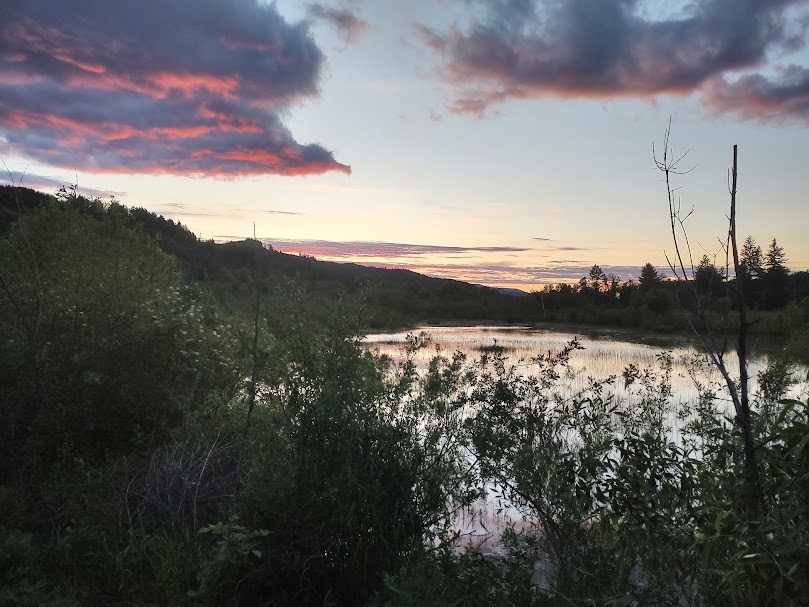
The Big Dam is just one marvelous beaver feature on the 20 acres we have dedicated to beaver habitat here at the farm. There are dozens of dams, large and small, numerous ponds and marshes, nearly impenetrable swamps, and plant life and wildlife galore, all established here since 2010, compliments of the beaver. Besides beaver, we have now a large population of muskrat – one of the cutest rodents on the planet, and river otters, herons, eagles and a bevy of songbirds. The yellow-breasted chats just showed up a few weeks ago, and if you come out to the farm, we are also likely to hear (and maybe see) snipe, willow flycatchers, various noisy ducks and their ducklings and even the elusive sora. There are regiments of frogs – chorus frogs, leopard frogs and red-legged frogs. All of this because we made space for the beaver, planted them some food (willows) and left them alone to do what they do best. In our case, here in the Northwest, when beaver do their thing, they make possible all manner of nature. And it is a beautiful sight to behold.
There is a lot to learn here, and there really isn’t a better place to see beaver management in action. We will see and discuss beaver dam analogs (DON’T DO IT), willows and willow ecology, vegetational succession in beaver habitats and many many other natural wonders. We will also see and discuss some effective strategies to manage and contain the expansion of beaver wetlands into areas where they are incompatible. So sign up for a tour and come on down. We likely won’t see actual beaver, but we will definitely see their dams, ponds, water paths, feeding habits and the kaleidoscope of plants and birds and insects and life that ensue when we give beaver room and board. What a deal! Here are the dates:
Wednesday May 27 10AM to 12PM
Saturday May 30 4PM to 6PM
Please pick a date and email me at george@schollsvalley.com and let me know how many people are coming with you. Please plan to wear boots and field clothes. Kids are welcome! See you here..
-George
Hi I’m interested in attending MAY 27th with Marita and Alissa. I think they just registered themselves so I’m doing the same. We are all working on and learning about beavers in our neighborhood wetlands. Thank you for doing this!
Hi Barbara
It will be great to have you all out. lots to observe and discuss!
See you on the 27th
-George
I’ve heard of an “Art Crawl” in the city where a myriad of artisans open their studios for a community event.
But, I like the idea of a “Beaver Kral” so much more!
Hi Laura
i had not thought of that, but a “Beaver Crawl” is a great idea. Let’s see if we can organize one. Besides our beaver swamps, ponds and marshes here at the farm, there are other sites where we have planted willows, ash and cottonwood and the beaver have resumed their good work. Council Creek, Beaverton Creek, Fanno Creek, Bronson Creek – all of these streams have major beaver works on display. I’ll talk with some folks and see if we can organize something. Maybe charter a bus..
Thanks for suggesting it!
-George
Hi George,
I’m interested in attending on the 27th and will be bringing one other person.
Thanks,
Michael Schulte
Hi Michael
Glad to have you both. See you next Wednsday.
-George