
It’s only June, but prairie bulb season is upon us again! This year’s successive heatwaves are driving everything more quickly than normal, so in terms of plant flowering and other developmental processes, we have skipped the last half of June and all of July, and here we are in August. We have asters flowering already, and goldenrods will be right behind them – in June! Likewise, the lilies are barrelling right along. The harvest brodiaeas are in full bloom. Camas, bluedicks, allium and hyacinth brodiaea are all done already. Since the calendar says it’s only June 23, I’d say we are in for a long hot August – at least two and a half months of it, coming your way.
Since we find ourselves living now in a climate much like that of the 20th-century Rogue Valley, which is to say our summers are hot and extraordinarily dry, it is comforting to know that many of our native prairie plants appear robust to this new order. And since it is a very early prairie bulb season, let’s talk about how important prairie lilies are to diverse native landscapes, now and in the future.
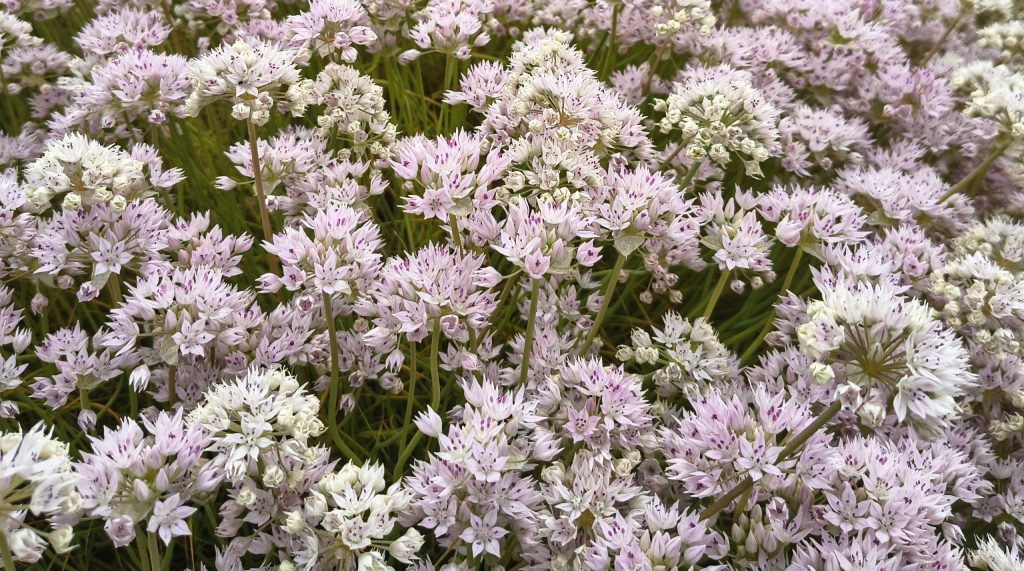
First, where do these prairie lilies occur? It is striking, really, that these species form a largely co-occurring cohort centered on western Oregon and northern California, in populations frequently mixed with or conterminous with each other in prairies, across their entire ranges. I have written in the past about plant ranges, how important they are to understanding the essence of plant populations, and what they can tell us about the likely future distributions of species. Based on years of observation of the performance of plants in wildland settings, a general rule has emerged that plants with broad ranges to our south, in interior California and southern Oregon, are performing comparatively well despite hotter, drier summers in the Willamette Valley. It is both intuitive, as well as apparently true, that a plant currently thriving in the vicinity of Redding, CA should be robust to increasingly frequent and intense heatwaves in the Willamette Valley. Twentieth-century temperature records in Redding topped out at 118F. Willamette Valley stations first approached this temperature territory in 2021. Red alders and western redcedar withered in the heat of the 2021 heat dome. The lilies, on the other hand, were unfazed. And their distributions are some of the reasons why:
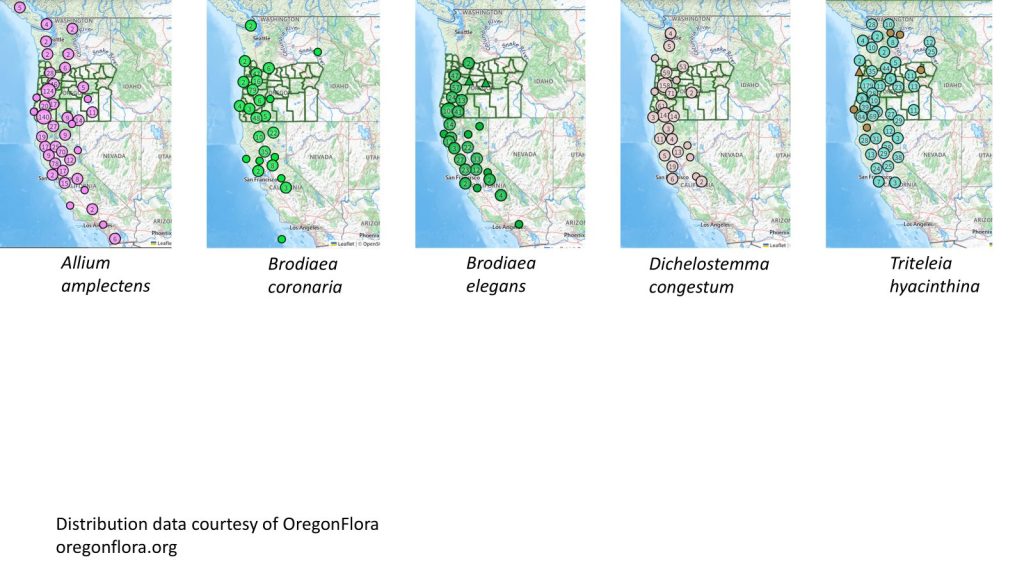
Note that the bulk of the ranges of all of these prairie lilies lies to our south, where they are baking right now in the vicinity of places like Medford, Redding, and even Bakersfield. One reason these plants are hardy in hot summer weather is that, for the most part, they have already done their thing by the time it gets hot. All of the species in the figure above grow roots in fall and winter, push up shoots and leaves in early spring, and have begun to senesce by May/June. As the leaves senesce, each lily is packing away sugars and other nutrients in a primary bulb, which will be its resting state for the remainder of the summer, no matter how long, hot and dry it is. All of this is good news for us since it means that these important and lovely prairie wildflowers are likely to stick around the Willamette Valley despite our hotter, drier summers.
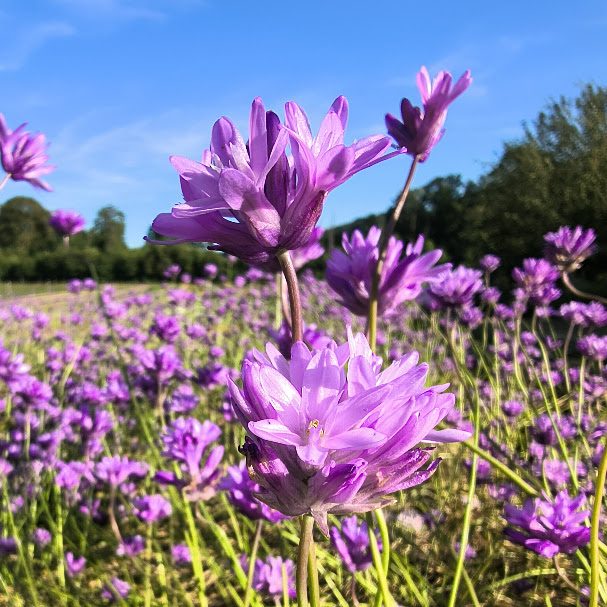
We have put an enormous effort into developing supplies of these prairie lily bulbs, and we are now able to sell them by the quart, with each quart of most species containing hundreds of bulbs. This makes restoring them at scale an economical proposition for the first time. We have restored suites of lilies now at three large prairie sites in the Tualatin Valley. Here is one of them – Glenwood, just west of Scholls – where we now have harvest brodiaea thriving in a neglected spot intermixed with weedy Leontodon :
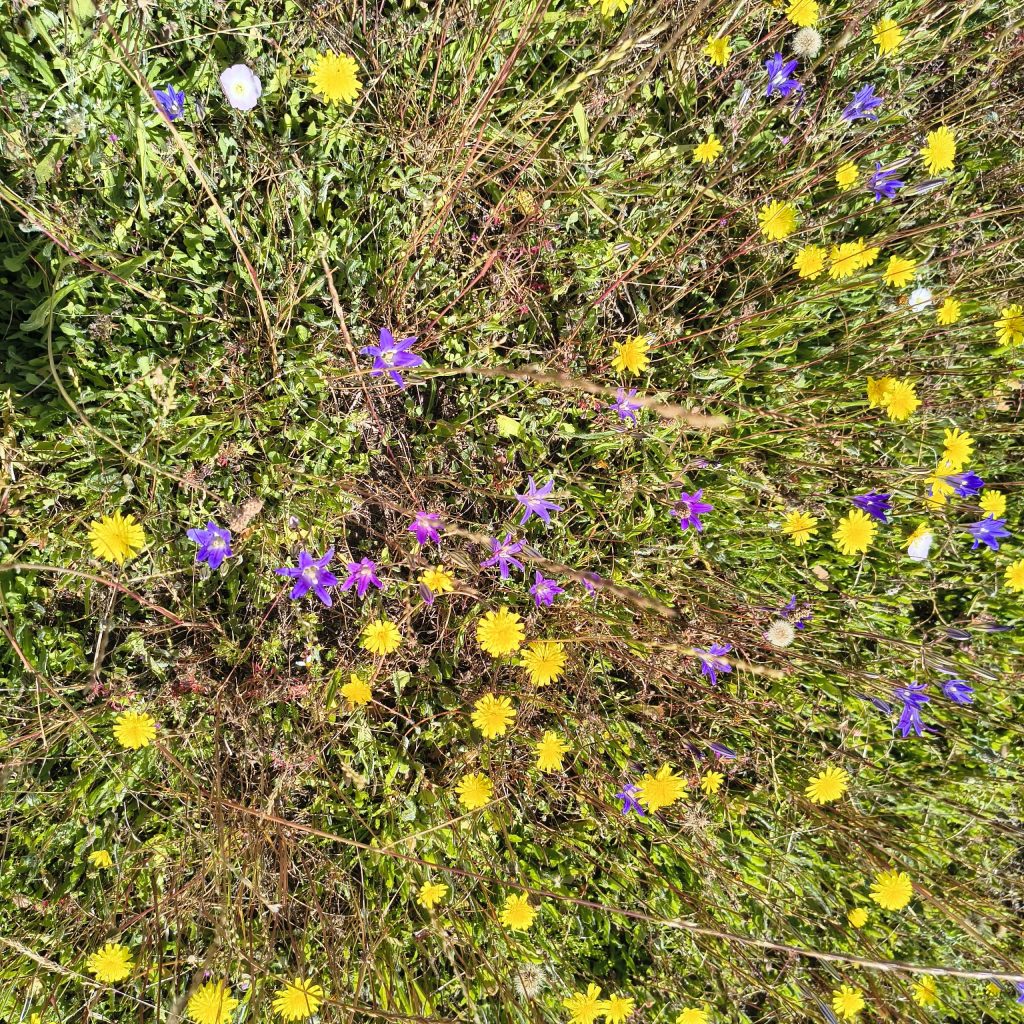
Each of these lily restoration projects involved hundreds of thousands to over a million lily bulbs. The methodologies we have developed for restoring lilies at this scale are highly effective and incredibly efficient. More on large-scale lily bulb restoration in the next post. In the meantime, jump on our new plant ordering portal, skip down to the “Bulb” section and order up some lilies. You and your pollinator friends will “bee” glad you did!
https://schollsvalley.cropcache.com/shop?season_year=2026
See you soon,
-George